
Flaky Ghee Pie Crust — For Pumpkin, Apple and Pecan Pies
Quick AnswerYou can make a flaky pie crust with ghee by chilling it until firm, cutting it into the flour with a little salt and sugar, and adding ice water just until the dough holds together. Ghee has no water, so it makes a tender, short, slightly crumbly crust with a rich, nutty flavor. For the flakiest layers, use half ghee and half cold butter.
How ghee behaves in pastry
Pie crust gets its flakiness from small pieces of solid fat that melt in the oven and leave layers behind. Butter helps with flakiness because its water turns to steam and puffs the layers. Ghee has almost no water, so an all-ghee crust is more tender and short, like a shortbread or a sandy tart crust, while a half-ghee, half-butter crust gives you both flakiness and that nutty ghee flavor.
Ghee is soft at room temperature, so the most important step is chilling it until firm before you start.
Ingredients for one 9-inch crust
1¼ cups all-purpose flour; ½ teaspoon salt; 1 teaspoon sugar; ½ cup ghee, chilled until firm (or ¼ cup chilled ghee plus 4 tablespoons cold butter, cubed); and 3 to 5 tablespoons ice water.
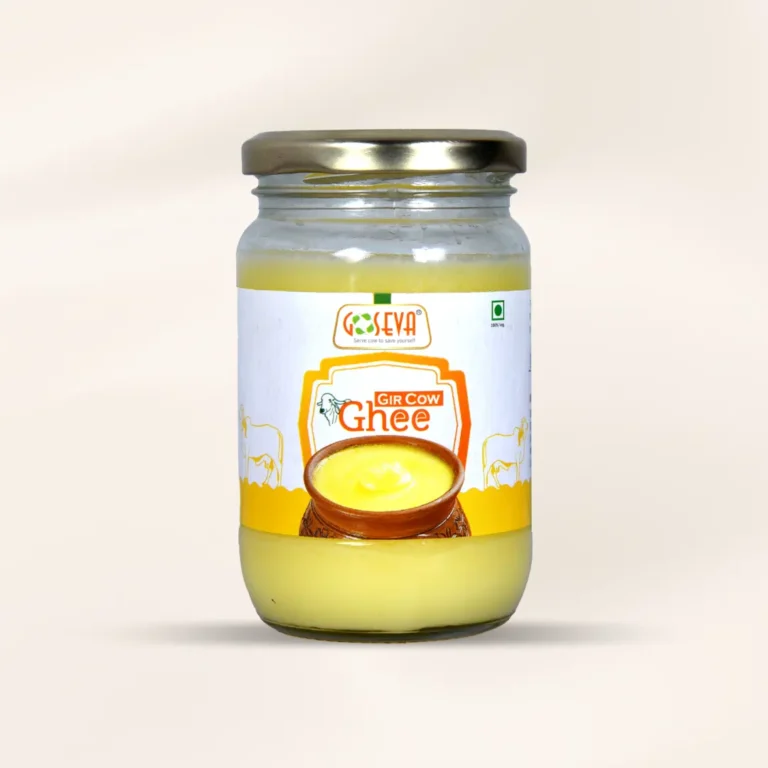
Use a good, aromatic ghee such as A2 Gir Cow Bilona Ghee; in a simple crust its flavor really shows.
Related reading on the GoSeva blog
- How to Sear a Steak in Ghee (Steakhouse Crust at Home)
- Baking with Ghee Instead of Butter — Ratios, Tips, and Results
- Shelf Life of Ghee vs Butter — How Long Each Really Lasts
Trusted outside source: Wikipedia: Ghee
Method
1. Chill. Spoon the ghee onto a plate and freeze for 15 to 20 minutes until firm, then cut it into small pieces.
2. Cut in the fat. Whisk flour, salt, and sugar. Rub in the ghee (and butter) with your fingertips or a pastry cutter until the pieces are the size of peas.
3. Add water. Sprinkle ice water a tablespoon at a time, tossing with a fork, until the dough holds together when squeezed.
4. Rest. Shape into a disc, wrap, and refrigerate at least 1 hour.
5. Roll and bake. Roll on a floured surface, fit into the pie plate, and chill again for 15 minutes. For custard pies like pumpkin, blind-bake at 400°F with pie weights for 15 minutes, remove the weights, and bake 5 to 8 minutes more.
Which pies it suits
An all-ghee crust is excellent for pumpkin, sweet potato, and custard pies, where a tender, crisp base matters more than tall flaky layers. A half-ghee crust is best for apple and other fruit pies that need a sturdy, flaky top. Pecan pie works with either. A pinch of cardamom in the dough is a lovely Indian-inspired twist for pumpkin pie.
Troubleshooting
If the dough cracks when rolling, it is too cold or too dry; let it sit 5 minutes or sprinkle a few drops of water. If it is greasy or sticky, the ghee was too warm; chill the dough again. If the bottom crust is soggy, blind-bake it first and bake the pie on the lowest oven rack.
Try Authentic A2 Gir Cow Bilona Ghee
Hand-churned by the traditional bilona method from Gir cows at our Gaurishala in Gujarat, India.
Frequently Asked Questions
Can you make pie crust with ghee?
Yes. Chill the ghee until firm and cut it into the flour like butter. An all-ghee crust is tender and crisp, while half ghee and half butter gives more flaky layers.
Why is my ghee pie crust crumbly?
Ghee has no water, so all-ghee crusts are naturally more tender and short. Add a little more ice water, or replace half the ghee with cold butter for more structure.
Do I need to blind-bake a ghee crust for pumpkin pie?
Blind-baking is recommended for pumpkin and other custard pies so the bottom stays crisp. Bake at 400°F with pie weights for 15 minutes, then 5 to 8 minutes without.
Gokripa Products — Gau Seva through Purity
Authentic A2 Gir Cow Bilona Ghee & Panchagavya products, supporting a Gir cow Gaurishala in Gujarat.
📱 Instagram: @goseva_gokripaproducts | 🎥 YouTube: @GoKripaProducts
👍 Facebook: /gokripaproduct | 💬 WhatsApp: +91 76984 89555
🛍 Store: gomataseva.org | Blog: blog.gomataseva.org




